
EXECUTIVE INTELLIGENCE
The Cancún Hub: What Changes When the Aircraft Is Already There
In private aviation, much of what a passenger never sees happens before takeoff: where the aircraft is, who operates it, how long it takes to be ready. There, having your own base changes everything.
For Vesta Jets that base is Cancún, and it isn't a matter of internal logistics: it is an advantage that reaches the passenger directly.
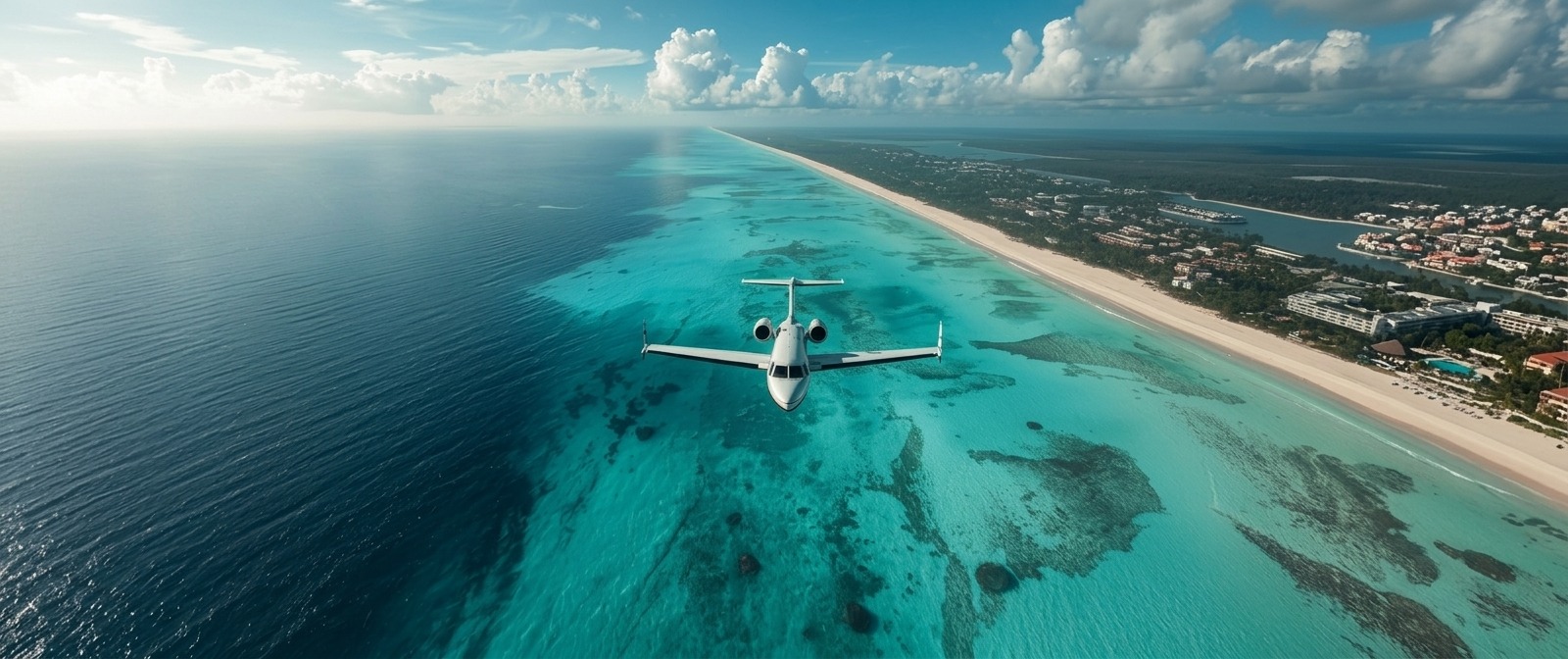
Cancún International Airport (MMUN) is one of the best-connected air hubs in Latin America and the natural gateway to the Mexican Caribbean. Operating from here, with aircraft, crews and equipment at the FBO, allows something remote management cannot match: immediate response.

What that means in practice
No repositioning costs
On routes originating or ending in the Yucatán Peninsula, basing the aircraft in Cancún reduces or eliminates the repositioning flights (ferry flights) that often drive up the cost of a charter.
Last-minute departures
With the team already on site, arranging a flight on short notice or reworking an itinerary stops being a problem and becomes routine.
Ground and sea transfers handled
From the executive ramp the journey continues without a break: ground transport to Tulum and the Riviera Maya, or a heliport and private boat to Isla Mujeres and Holbox.
Add to that the advantage of arriving privately at an international destination: customs and immigration are cleared at the executive ramp, away from the crowds of the commercial terminal, and the passenger goes from the aircraft to the next transfer in minutes.
Frequent routes to and from Cancún
Cancún connects naturally with the rest of the network: Mexico City and Monterrey for business agendas, Miami and New York to the north, and the beach destinations of the Caribbean. With the fleet based here, any route originating or ending in the peninsula starts with an edge over an operator that has to bring the aircraft in from another city, because the prior repositioning flight is avoided.
Ground services from the executive ramp
A base is not only the aircraft: it is the team around every flight. From the Cancún FBO, ramp handling, customs and immigration, onboard catering, hangar and the immediate link to ground or sea transport are all coordinated. That end-to-end control is what lets a last-minute change, an earlier departure or an added passenger, be solved without friction.
An advantage for whoever books, too
The value of a local base is not only for the passenger, but also for whoever plans the trip. Luxury travel agencies, family offices and executive assistants find in Vesta a single point of contact that responds quickly, confirms availability with certainty and takes charge of the whole operation, from the flight to the transfers, without relying on third parties at a distance. For anyone booking on behalf of a demanding client, that reliability matters as much as the flight itself.
Frequently asked questions
What is a repositioning (ferry) flight, and why does it matter?
It is the flight that moves the aircraft empty to the passenger's point of origin, or back to its base. When the aircraft isn't based nearby, that leg is usually charged; with Vesta's fleet in Cancún, on peninsula routes that cost is reduced or disappears.
Does Vesta Jets have a base in Cancún?
Yes. Cancún (MMUN) is its main operations base, with aircraft, crews and equipment at the FBO.
Can a last-minute flight be arranged?
Yes. With the team on site, short-notice departures and itinerary changes are resolved quickly.
What transfers does Vesta coordinate in the region?
Ground transport to Tulum and the Riviera Maya, and a heliport or private boat to Isla Mujeres and Holbox, from the executive ramp itself.
Which Mexican Caribbean destinations can you fly to?
The whole coast: Cancún, the Riviera Maya with direct arrival to Tulum, Cozumel and the island connections.